
Overview
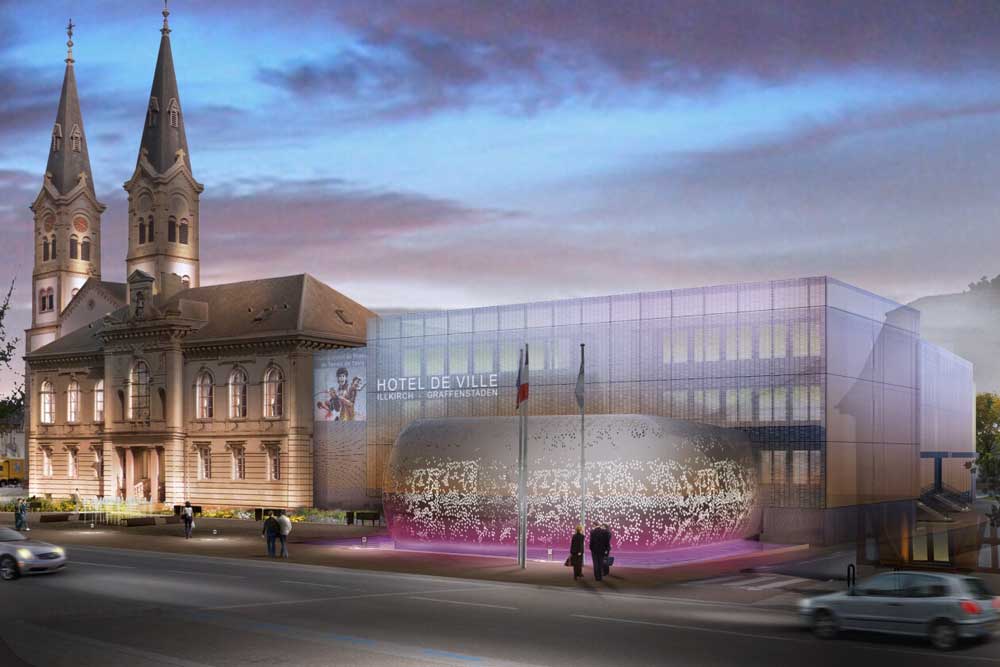
There was another stainless steel related project completed in East Asia concurrently in 2014 when the Illkirch-Graffenstaden Town Hall in France was opened. Here comes Ventilation Tower of Tokyo Station which we will introduce this week. Now let us embark on our journey to Japan and see how stainless steel is applied in the Ventilation Tower of Tokyo Station.
Ventilation Tower of Tokyo Station
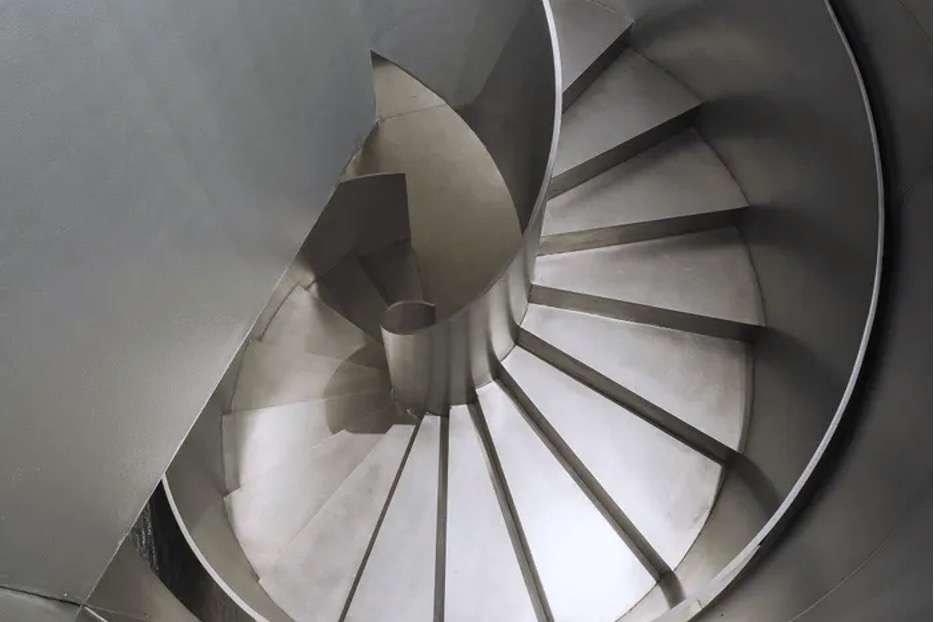
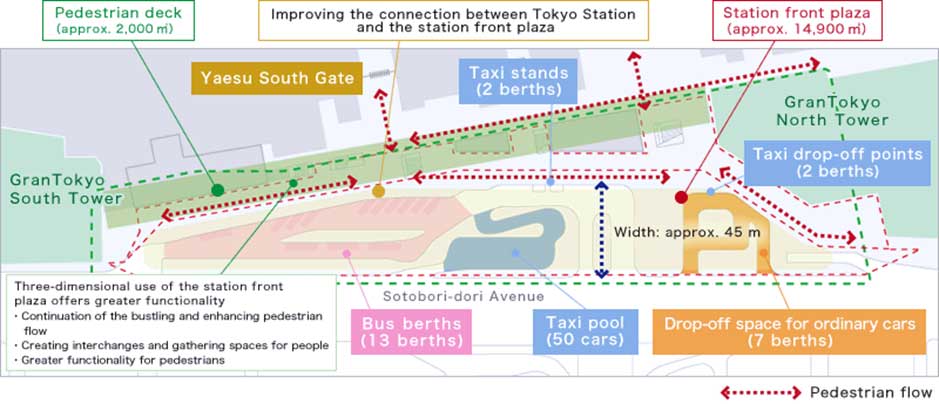
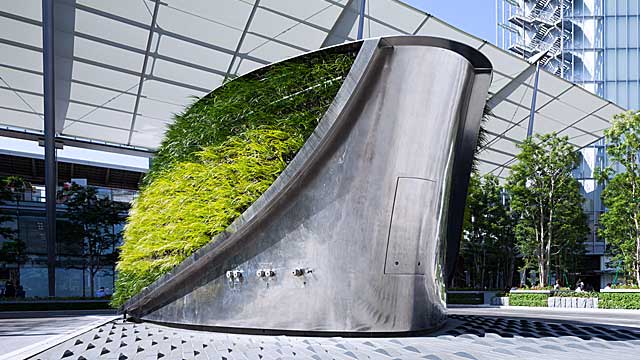
Ventilation Tower of Tokyo Station is officially known as Tokyo Station, Yaesu Central Ventilation Tower. It measures 17m long, 6.7m wide and 4.8m high, siting elegantly on the 14900-square-meter station front plaza in front of the Yaesu exist of Tokyo Station in Japan.
Generally, railway ventilation system is designed to prevent any significant deterioration of air quality caused by increasing passengers. Apart from the general function fulfilled, the Ventilation Tower of Tokyo Station also functions as a monument. It’s kind of a ship sailing into the future (NIKKEN SEKKEI LTD 2026).
Project Background of Ventilation Tower of Tokyo Station
Although confused by the project name, it is a commercial project rather than owned by the government. The client East Japan Railway Company (JR East) is actually a private Japanese railway operator, a spin-off from the government-run Japanese National Railways (JNR) for several years before being totally sold to the public in 2002.
The Ventilation Tower of Tokyo Station, together with the ‘GranRoof Front’ of Tokyo Station Yaesu-Exit constitutes part of the redevelopment project for the Yaesu area of Tokyo Station. According to KIKUKAWA KOGYO CO., LTD. (2026) and ISSF (2025), the Tower is also a monument, but neither source implies what it commemorates. According to Nikken (2026), the Yaesu area is designed to signal the “future” with modern design, in contrast with the Marunouchi exit symbolizing the “history”. Under such context, maybe it commemorates the redevelopment which signifies that Tokyo Station is sailing from the past to the future.
The Design of Ventilation Tower of Tokyo Station
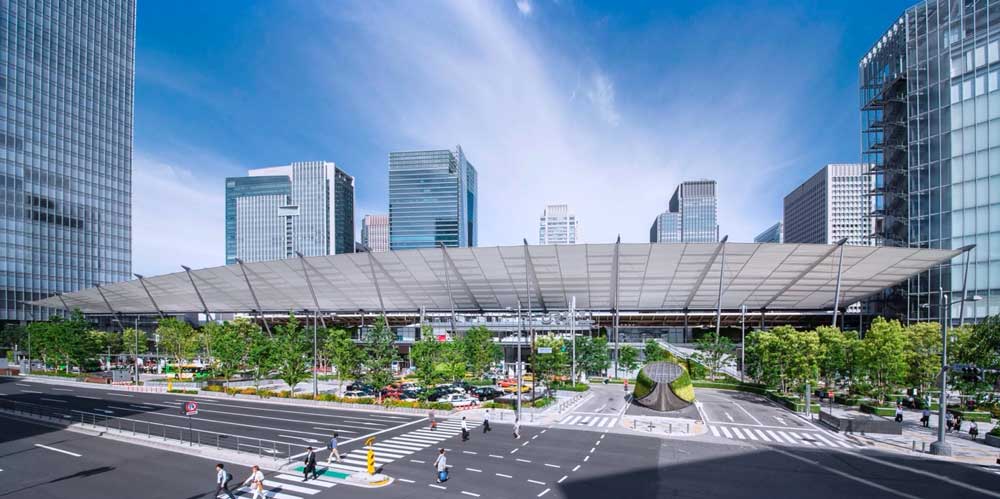
To understand the design of Ventilation Tower of Tokyo Station, we need to see the bigger picture, the landmark ‘GranRoof Front’.
According to Tokyo Station City (2026), the GranRoof is designed by Helmut Jahn, a world prestigious architect renown for modern architecture. It is themed around the idea of a sail of light characterized with sail-like membrane structure. The deck under the roof, or known as the GranRoof Garden, is transformed together into a third space for relaxation where seasonal plants are planted with inspiration coming from Japan’s Edo-period gardening culture.
As we piece together the elements, say the sail, the plants, the design of Ventilation Tower of Tokyo Station comes to dawn on us. Its sail-like shape decorated with greenery doesn’t come arbitrarily. It is designed thoughtfully with the bigger picture in mind without any compromise on the desired purposes as a ventilation tower, a monument and a greening construction (KIKUKAWA KOGYO CO., LTD. 2026).
Stainless Steel Applied in Ventilation Tower of Tokyo Station
The selection of stainless steel is carefully planned with factors of both the operation environment and the functions considered. Given so many cases where stainless steel sheets play the significant role as introduced before, the choice here seems ordinary and predictable.
Yet the case of Ventilation Tower of Tokyo Station is remarkably distinctive and different in terms of both the stainless steel grade and the structure of the Tower. In light of the grade, duplex stainless steel SUS329J3L is introduced, not the common grade 304 nor 316L. According to the fabricator Kikukawa (2026), the two-phase (Ferritic-Austenitic) stainless steel SUS329J3L was confirmed for enhanced durability and corrosion resistance.
Below table lists the chemical compositions and mechanical properties of JIS G4304 SUS 329J3L duplex stainless steel plate.
| Specification JIS G4303: 2021 | ||||||||
| SUS329J3L Chemical Compositions (%) | ||||||||
|---|---|---|---|---|---|---|---|---|
| C | Si | Mn | P | S | Ni | Cr | Mo | N |
| ≦0.030 | ≦1.00 | ≦2.00 | ≦0.040 | ≦0.030 | 4.50-6.50 | 21.00-24.00 | 2.50-3.50 | 0.08-0.20 |
| Specification JIS G4303: 2021 | |||||
| SUS329J3L Mechanical Properties | |||||
|---|---|---|---|---|---|
| Yield Strength (MPA) |
Tensile Strength (MPA) |
Elongation (%) |
Hardness | ||
| HBW | HRC | HV | |||
| ≧450 | ≧620 | ≧18 | ≦302 | ≦32 | ≦320 |
From the data above, it is not hard to infer that SUS329J3L can be replaced by duplex S32205 (or 2205) which sounds more familiar per specification ASTM A240. In terms of structure, the sail-like Ventilation Tower of Tokyo Station is completed with 3D-CAD model and dual-curved welding technology. The magic is that the giant workpiece denies any internal base frames to support its exterior metal structure. According to Kikukawa (2026), the curved monument is made from 24 units of dual-curved 9mm thick and 1067mm tall stainless steel plates. “Dual curved” means every panel delivered and welded onsite for immediate installation are pre-welded in the factory by two pieces of stainless steel plates into a single unit.
Duplex Stainless Steel Plates from CIVMATS China
If you are looking for high-quality SUS329J3L or 2205 duplex stainless steel plates from China, as in the case of Ventilation Tower of Tokyo Station, welcome to CIVMATS China. Dimension is customizable.
Apart from flat products stainless steel sheet plate coil strip, CIVMATS also produce long products stainless steel bar, pipe tube, wire & ropes. You are welcome to enquire or/and purchase. Choose CIVMATS, choose reliability and safety in China.